Memory Marketplace
December 2025
Tools used: Figma, Exploratory Ethnography, Adobe InDesign
Context and timeline
Over the past decade, societies have steadily normalized large-scale data extraction. Biometrics have become normal. And AI governance expanded quietly. Digital archives turned culture into infrastructure. At the same time, neuroscience research continues to push toward deeper understandings of how memory forms, stores, and could one day be reconstructed.
In Gulf societies especially, where collective identity, heritage preservation, and centralized planning already shape daily life, these trends intersect in unique ways. I explored a speculative future between 2045 and 2055 where memory itself becomes a regulated economic resource. Gradually. First as voluntary archiving. Then as incentivized contribution. Finally as institutionalized extraction through a state platform known as the Gulf Memory Authority.
The Memory Marketplace imagines what happens when preserving identity turns into trading it.
Problem
Data economies already commodify attention, behavior, and personal information.
Memory remains one of the few deeply human experiences not yet formalized as infrastructure. But pressures are building: cultural anxiety around forgetting, environmental loss of physical heritage, political narratives around digitization and progress, technological optimism in neuroscience and AI, the world is moving fast.
I wanted to question what happens when preservation crosses into ownership. If memories can be extracted, stored, priced, and redistributed, who controls identity? And how does that reshape relationships in a collectivistic culture where personal experiences are deeply tied to family and community?
I wasn’t trying to predicting technology with this project. For me, it was about exploring the social consequences once systems make something technically possible.
Decision
(exploring a speculative scenario)
Instead of inventing a sudden dystopia, I built a future that grows directly from existing structures. I positioned the scenario within a framework of:
high neurotechnology adoption
increasing identity regulation
In this world, memory extraction becomes a civic process. Citizens are encouraged to contribute memories to a national archive. Businesses profit from buying and selling curated experiences. Neurotechnologists are subsidized to improve extraction and categorization. The government platform mirrors existing Gulf e-government services in tone, layout, and opacity. Nothing feels overtly sinister. The system feels familiar. That familiarity is the intervention I decided on.
Execution
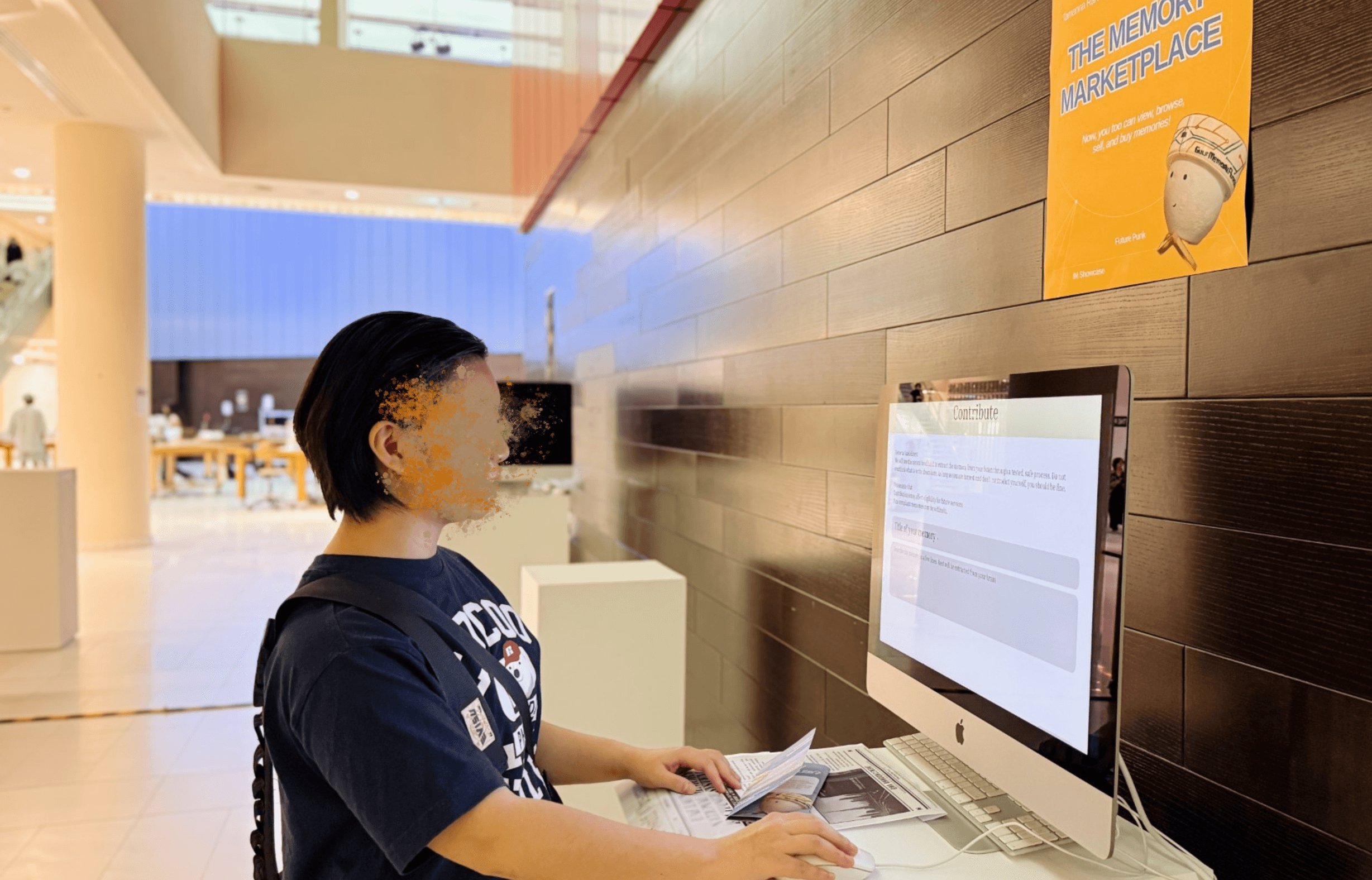
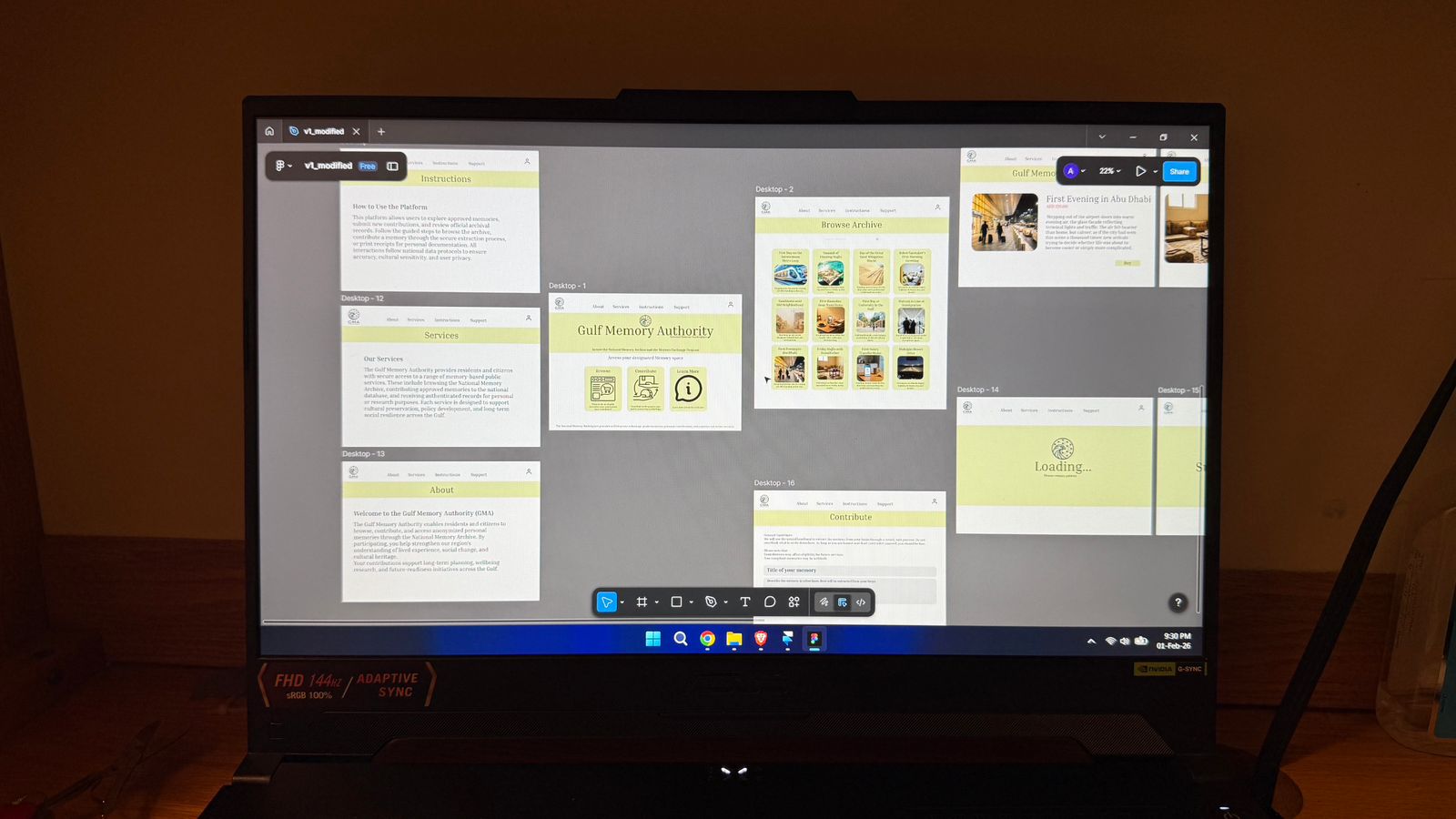
The project was designed as an experiential world rather than a single interface. The core artifact is a speculative digital portal for the Gulf Memory Authority. Users can:
browse approved memories
view categorized experiences
purchase or sell memories
submit personal recollections for archival (and compensation)
Alongside the interface, I created a physical Memory Headband to represent the ritual of extraction. It doesn’t function technically. It functions symbolically. The act of wearing it marks the moment memory shifts from personal experience to institutional asset.
To deepen plausibility, I extended the world through transmedia elements:
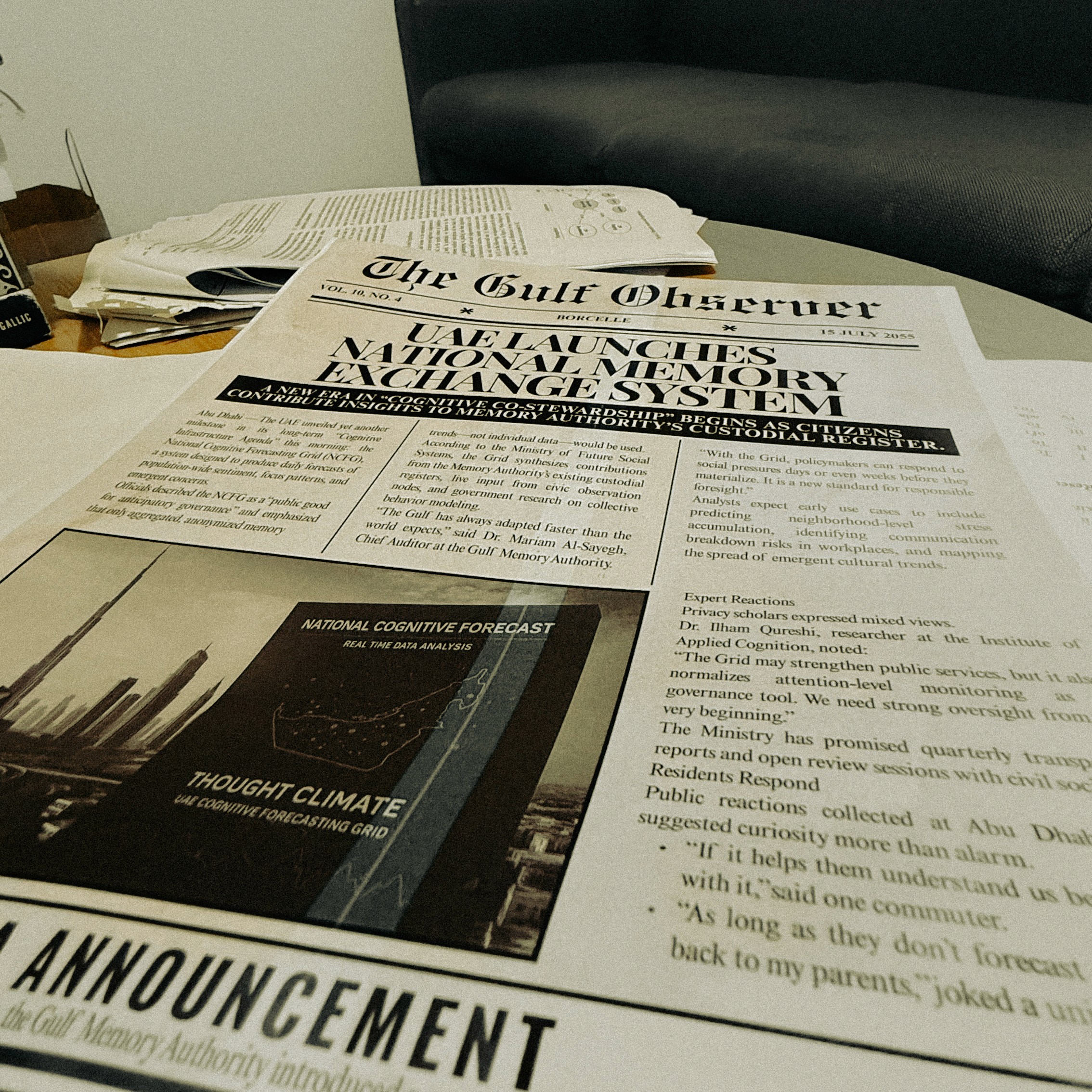
newspapers dated 2055
government posters encouraging contribution
transaction receipts framed as “tokens of appreciation”
official extraction kits with bureaucratic language
Rather than explaining the future, these fragments normalized it. Participants encountered the system the way people encounter real policies.
Quietly. Everywhere.
Anticipatory ethnography
To understand how this future might feel rather than just look, my teammate and I ran an anticipatory ethnographic study with six participants.
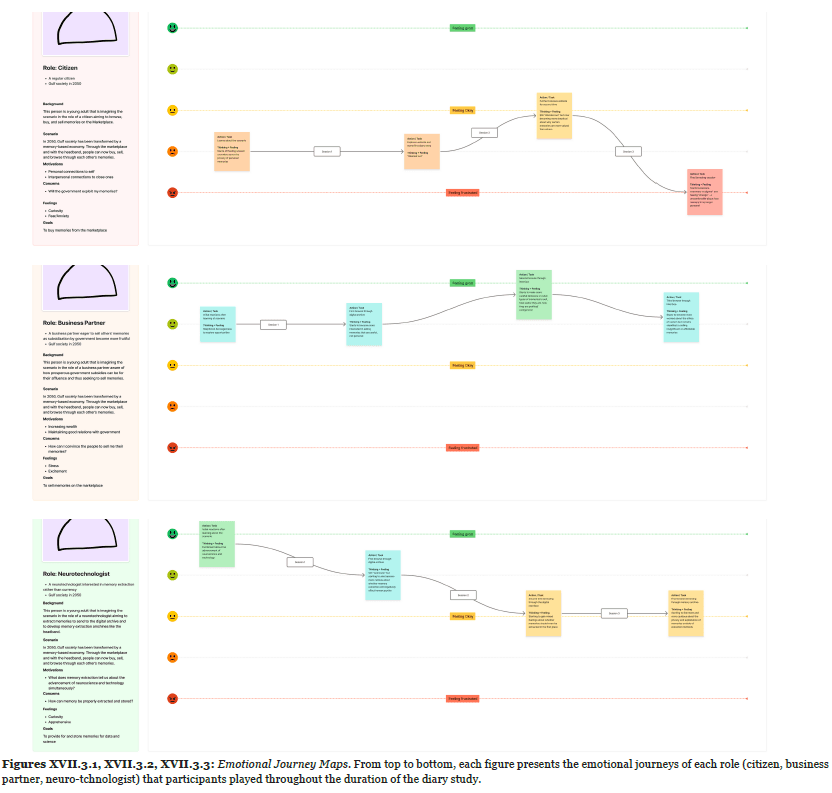
Each participant role-played one of three positions: citizen, business executive, neurotechnologist. The study combined:
diary entries across three sessions
free browsing of the marketplace interface
contextual interviews
Participants documented emotions, reactions, and imagined behaviors as if living within this society. This allowed the speculative system to be tested against real human responses.
Result / findings
Reactions diverged sharply based on role.
Citizens grew increasingly uneasy the longer they browsed. They noticed:
higher prices for emotionally significant memories
exploitation of personal experiences for profit
the feeling that selling memories betrayed personal identity
In a collectivistic cultural context, selling memories tied to loved ones felt especially uncomfortable.
Business partners and neurotechnologists responded differently. While they raised ethical concerns about accessibility and categorization, most remained curious and largely accepting. Many viewed memory extraction as inevitable and even healthy if regulated properly. To them, the benefits outweighed the risks.
Across roles, one insight became clear: The future gained legitimacy through not force, rather through -
familiar interfaces
bureaucratic language
narratives of progress and preservation
The system felt believable precisely because it resembled existing institutions.
Why it matters
The Memory Marketplace isn’t about whether memory extraction will happen. It explores what happens socially once systems make it normal. Small structural choices drove massive shifts:
framing contribution as civic duty
embedding the platform in government services
pricing emotional experiences
rewarding participation
Together, these turned memory from something lived into something managed. The project reveals how identity can be reshaped not through coercion, but through infrastructure.